

When Should You Choose a U Panel Jumbo Bag Over Other FIBC Designs?
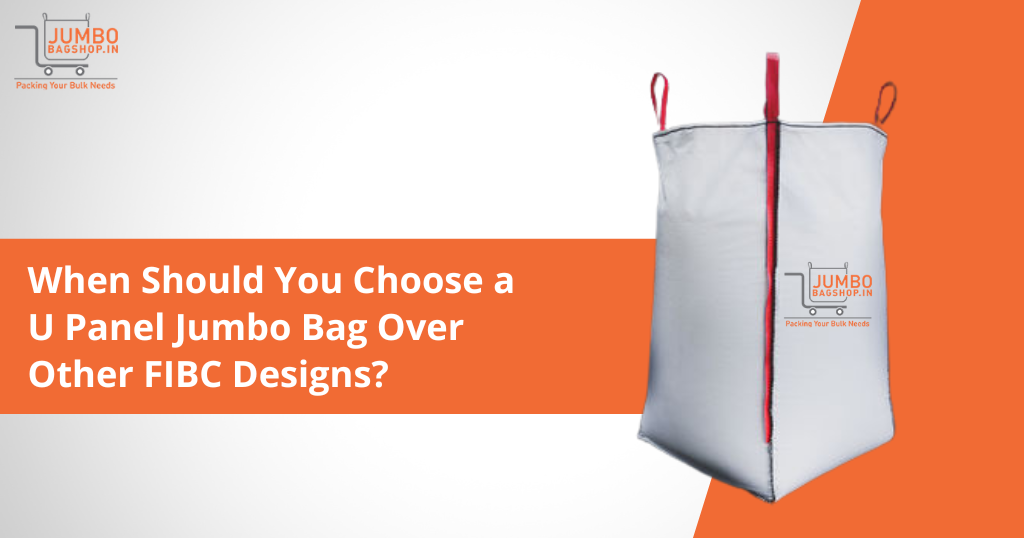
Selecting the right bulk packaging solution can directly affect handling efficiency, storage utilization, transportation costs, and product safety. With several Flexible Intermediate Bulk Container (FIBC) designs available in the market, businesses often find it challenging to determine which option best suits their material handling requirements.
Among the most widely used FIBC designs, the u panel jumbo bag stands out for its balance of strength, stability, and cost-effectiveness. It serves a wide range of industries that require dependable bulk packaging without the complexity of specialized bag designs.
But when should you choose a U panel design over tubular, four-panel, or baffle bags?
In this guide, we’ll explore the construction, advantages, applications, and ideal use cases of U panel FIBCs to help buyers make informed purchasing decisions.
Understanding the U Panel Jumbo Bag Design
A U panel bulk bag gets its name from the way it is constructed. The main body consists of a single piece of woven polypropylene fabric shaped like a “U.” This fabric forms the bottom and two opposite sides of the bag. Additional side panels are then stitched to complete the structure.
This design creates a strong and durable packaging solution capable of handling substantial loads while maintaining good shape during filling and storage.
Unlike some other FIBC designs that rely on multiple stitched panels throughout the body, U panel construction offers an excellent balance between structural strength and manufacturing efficiency.
Why U Panel Bags Remain Popular Across Industries
Businesses handling dry bulk materials often choose U panel bags because they provide dependable performance in a variety of storage and transportation environments.
Some key advantages include:
-
Strong load-bearing capability
-
Excellent stacking stability
-
Suitable for a wide range of bulk materials
-
Cost-effective compared to specialized designs
-
Easy filling and discharge options
-
Reliable performance during transportation
These characteristics make them a practical choice for businesses seeking standard bulk packaging solutions.
When a U Panel Jumbo Bag Is the Right Choice
1. When You Need Better Shape Retention Than Basic Bulk Bags
Shape retention becomes important when bags need to be stacked in warehouses or transported efficiently.
The construction of a U panel bag helps it maintain a more uniform shape compared to certain basic designs. This improved structure can make handling easier during storage and movement.
For businesses managing inventory in limited warehouse space, consistent bag shape often contributes to better stacking and organization.
2. When Packaging Medium to Heavy Bulk Materials
Many industries handle materials that require strong and reliable packaging.
U panel bags are commonly used for:
-
Agricultural products
-
Fertilizers
-
Seeds
-
Animal feed
-
Minerals
-
Construction materials
-
Industrial powders
-
Granules and pellets
Their sturdy design allows them to accommodate substantial weights while maintaining structural integrity throughout the supply chain.
3. When Cost Efficiency Matters
Not every application requires premium specialty bags.
For many businesses, U panel FIBCs provide an excellent middle ground between performance and affordability. They offer stronger structural characteristics than some basic alternatives while avoiding the higher costs associated with more specialized designs.
This makes them particularly attractive for businesses looking to optimize packaging expenses without compromising reliability.
4. When Products Need Stable Transportation
Transportation often exposes bulk packaging to movement, vibration, and stacking pressure.
A well-designed U panel bag helps distribute weight effectively and maintain stability during transit. This can support safer handling throughout loading, transportation, and unloading operations.
Companies moving materials across multiple locations frequently choose this design because of its dependable transportation performance.
U Panel Bags vs Tubular Bags
Both designs are widely used, but each offers specific advantages.
Tubular bags are manufactured from circular woven fabric, reducing the number of side seams. This can be beneficial for certain products and applications.
However, U panel bags often provide:
-
Better dimensional consistency
-
Improved shape retention
-
Strong stacking performance
-
Greater versatility across industries
If your priority is maintaining bag shape and achieving stable stacking, a U panel design may be the better option.
Businesses comparing these designs can also explore related packaging solutions through Jumbobagshop’s Tubular Bags category to understand the differences between available ready-stock options.
U Panel Bags vs Four Panel Bags
Four-panel bags consist of four separate side panels stitched together.
While four-panel bags can offer a more defined square shape, they generally involve additional seams and construction complexity.
A U panel design often provides:
-
Strong overall structure
-
Fewer body seams
-
Efficient load distribution
-
Reliable performance for standard bulk packaging
For many common industrial applications, the difference in performance may not justify choosing a more complex design.
U Panel Bags vs Baffle Bags
Baffle bags contain internal fabric panels that help maintain a cube-like shape during filling.
They are particularly useful when maximizing storage density and container utilization is a top priority.
However, not every application requires this level of optimization.
A standard U panel bulk bag may be the better choice when:
-
Storage space is not extremely limited
-
Materials flow easily
-
Simplicity is preferred
-
Packaging costs need to remain controlled
For general-purpose bulk packaging, many businesses find U panel bags provide all the performance they need.
Industries That Commonly Use U Panel Jumbo Bags
The versatility of this design allows it to serve multiple sectors across India.
Common applications include:
Agriculture
Farmers and agricultural businesses use these bags for storing and transporting:
-
Grains
-
Seeds
-
Animal feed
-
Fertilizers
Construction
Construction projects often require bulk handling of:
-
Sand
-
Aggregates
-
Cement-related materials
-
Stone products
Chemical and Industrial Materials
Many dry industrial materials can be safely stored and transported using suitable FIBC packaging solutions.
Minerals and Mining
Mining operations frequently rely on durable bulk bags for material movement and temporary storage.
Because of their adaptability, U panel bags continue to be one of the most widely used FIBC configurations in industrial packaging.
Factors to Consider Before Buying U Panel Bags
Before making a purchase, evaluate your operational requirements carefully.
Key factors include:
Material Characteristics
Consider:
-
Density
-
Flowability
-
Particle size
-
Moisture sensitivity
These characteristics influence the type of bag best suited to your application.
Weight Requirements
Always select a bag with an appropriate safe working load (SWL) for the intended material.
Filling and Discharge Needs
Different bags may include:
-
Open tops
-
Spout tops
-
Skirt tops
-
Flat bottoms
-
Discharge spouts
Choose a configuration that aligns with your filling and unloading processes.
Storage Conditions
Warehouse layout, stacking practices, and transportation methods should all influence bag selection.
Where to Buy U Panel Bags Online in India
Businesses increasingly prefer online purchasing because it simplifies product comparison and procurement.
When looking to buy u panel bags online, focus on suppliers that clearly provide:
-
Product specifications
-
Load capacities
-
Filling options
-
Dimensions
-
Ready-stock availability
Jumbobagshop offers a range of standard FIBC solutions that help businesses purchase suitable packaging products without the delays often associated with custom manufacturing processes.
Because the platform focuses on ready-made inventory, buyers can review available specifications and choose products that match their operational requirements.
How Jumbobagshop Helps Buyers Find the Right FIBC Solution
Selecting the correct FIBC design often requires understanding the advantages of different bag types. At Jumbobagshop, buyers can explore educational resources such as Know Your Bag to better understand various FIBC constructions, applications, and handling considerations before making a purchase.
In addition, categories such as Tubular Bags, Baffle Bags, and other jumbo bag options available on Jumbobagshop allow businesses to compare ready-stock products and identify the most suitable solution for their operational requirements.
Whether you want to buy u panel bags for agricultural storage, industrial applications, or construction materials, having access to detailed specifications and readily available options through Jumbobagshop can help simplify the selection process and support informed purchasing decisions.
Final Thoughts
Choosing the right FIBC design depends on the material being handled, transportation requirements, storage conditions, and budget considerations.
A u panel jumbo bag is often an excellent choice when businesses need a strong, versatile, and cost-effective packaging solution for bulk materials. It delivers reliable performance across multiple industries while offering good shape retention and stacking stability.
Whether you are planning to buy u panel bags for agricultural products, construction materials, industrial powders, or other bulk goods, understanding the strengths of this design can help you select a packaging solution that supports smoother handling and efficient operations.
For buyers seeking dependable ready-stock FIBC products in India, evaluating available U panel options alongside other bag designs can ensure the best fit for both current and future packaging needs.