

Buying FIBC Tubular Bags? Compare These Key Features First
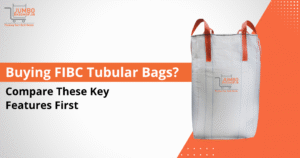
Choosing the right bulk bag is not simply about finding a container that can hold a specific weight. For businesses handling powders, granules, grains, chemicals, minerals, fertilizers, construction materials, and other dry bulk products, the design of the bag can directly affect filling, handling, storage, transportation, and discharge.
This is where FIBC Tubular Bags can be a practical choice. Also known as circular bags, these bulk bags are made using tubular fabric that creates a continuous body with fewer vertical seams. This construction can provide useful advantages for applications where strength, product containment, and efficient handling matter.
However, not every tubular FIBC is designed for the same application. Buyers need to compare factors such as safe working load, bag dimensions, safety factor, top and bottom construction, lifting loops, lamination, dust protection, and liner requirements before placing an order.
If you are planning to buy FIBC Tubular Bags, here are the key features worth comparing first.
What are FIBC Tubular Bags?
FIBC Tubular Bags are flexible intermediate bulk containers manufactured using tubular or circular woven polypropylene fabric. Unlike conventional bags made by joining multiple flat side panels, the tubular body is produced as a continuous fabric structure.
This construction reduces the number of vertical seams along the bag body. As a result, tubular bags can offer a strong and reliable packaging solution for many dry bulk materials. They are commonly used across industries including agriculture, chemicals, construction, food processing, minerals, and fertilizers.
The cylindrical construction also makes tubular bags useful for applications where product containment and a clean external surface are important. Depending on the product and handling process, buyers can select different filling and discharge configurations.
1. Check the Safe Working Load First
The first specification to compare when buying FIBC Tubular Bags is the Safe Working Load, commonly referred to as SWL.
SWL indicates the maximum weight the bag is designed to safely carry under specified conditions. Different tubular FIBC bags can be manufactured for different capacities, so selecting the correct SWL is essential.
For example, Jumbobagshop lists tubular bag configurations with capacities such as 1,000 kg and 1,250 kg. Dimensions can also vary depending on the required application.
Do not select a bag simply because its size appears suitable. Consider:
-
The actual weight of the material
-
Bulk density of the product
-
Filling method
-
Lifting equipment
-
Transportation conditions
-
Storage requirements
-
Frequency of handling
Choosing the appropriate SWL helps ensure that the bag is suitable for the intended application.
2. Compare the Safety Factor
SWL should always be considered together with the bag’s safety factor.
The safety factor represents the relationship between the bag’s tested breaking strength and its rated working load. A common specification for industrial FIBC bags is 5:1, although the appropriate construction depends on the application and applicable requirements.
Several tubular bag configurations listed by Jumbobagshop use a 5:1 safety factor.
When comparing suppliers, do not look only at the price. Check whether the bags have been designed and tested according to the requirements of your intended application.
For heavy-duty handling, repeated transportation, or demanding industrial environments, the construction and safety factor can be particularly important.
3. Choose the Right Bag Dimensions
Two bags can have the same SWL but completely different dimensions.
Bag dimensions influence how much material can be accommodated, how efficiently the bag fits into storage areas, and how it can be positioned during transportation.
Common tubular FIBC configurations may have dimensions such as 90 × 90 × 90 cm, 90 × 90 × 120 cm, 90 × 90 × 150 cm. Jumbobagshop’s available tubular bag configurations demonstrate that dimensions can be selected according to capacity and application requirements.
Before ordering, consider:
-
Available warehouse space
-
Pallet dimensions
-
Vehicle loading requirements
-
Stacking height
-
Filling equipment
-
Discharge clearance
The right dimensions can help make storage and transportation more efficient.
4. Pay Attention to the Top Construction
The top of an FIBC determines how the material enters the bag.
For automated or controlled filling operations, a spout top can provide a more convenient connection with filling equipment. For applications where the bag needs to be opened quickly, another top configuration may be more suitable.
Jumbobagshop offers tubular bag configurations with options such as spout and skirt tops, depending on the specific bag model.
The best choice depends on how your facility fills the bags rather than simply which option is most common.
5. Compare the Bottom Design
The bottom construction is equally important because it determines how the product can be discharged.
A flat bottom may be appropriate when the bag is emptied using a particular handling method or when the application does not require controlled discharge through a spout.
A bottom spout, on the other hand, can provide more controlled discharge and can be useful when connecting the bag to downstream equipment.
For example, Jumbobagshop lists tubular bags with both flat-bottom and spout-bottom configurations.
When selecting the bottom design, think about where and how the material will be discharged. This can prevent handling problems after the bag has already been delivered.
6. Check the Lifting Loop Configuration
FIBC bags are designed to be moved using equipment such as forklifts, cranes, or other lifting systems. The loop configuration therefore needs to match the equipment used at your facility.
Tubular bags can be manufactured with different lifting arrangements, including cross-corner loop configurations. Jumbobagshop’s tubular bag listings, for example, include white cross-corner loops on several configurations.
Before purchasing, check:
-
Number of lifting loops
-
Loop position
-
Loop type
-
Lifting equipment compatibility
-
Required handling method
A suitable lifting configuration makes loading, unloading, and movement easier and safer.
7. Consider Lamination and Dust Protection
The material being packed should influence the fabric specification.
If the product is sensitive to moisture, contamination, or fine-particle leakage, you may need additional protection. Depending on the application, this can include coated or laminated fabric, a polyethylene liner, or a dustproof construction.
Jumbobagshop provides tubular FIBC configurations with specifications that can vary by product, including options related to lamination and dust protection.
For example, fine powders may require greater attention to product containment than larger granules. Similarly, moisture-sensitive materials may benefit from a liner or suitable fabric construction.
Instead of automatically choosing the most economical configuration, match the bag construction to the characteristics of your product.
8. Decide Whether You Need a Liner
A liner can provide an additional barrier between the packed material and the woven polypropylene fabric.
This can be useful for applications involving:
-
Fine powders
-
Moisture-sensitive materials
-
Hygroscopic products
-
Food-related products
-
Products requiring additional cleanliness
-
Materials where contamination control is important
Not every application requires a liner. However, if product protection is a priority, it is worth discussing liner options with your FIBC supplier before ordering.
The right liner specification can complement the tubular bag’s construction and provide an additional level of protection during storage and transportation.
9. Look at Product-Specific Requirements
The material being packed should always be part of your FIBC selection process.
A bag used for fertilizer may have different requirements from one used for food ingredients, chemicals, minerals, or construction materials.
Ask these questions before purchasing:
-
Is the material powder, granule, or larger bulk material?
-
Does it absorb moisture?
-
Is dust containment important?
-
Does the product require food-grade packaging?
-
Does it require UN-certified packaging?
-
Will the bag be exposed to outdoor conditions?
-
How will it be filled and discharged?
Answering these questions first makes it easier to identify the appropriate tubular FIBC configuration.
FIBC Tubular Bags vs Other FIBC Designs
Tubular bags are only one type of FIBC. U Panel Bags and 4 Panel Bags are also widely used for bulk packaging.
The main advantage of a tubular design is its continuous fabric body with fewer vertical seams. This can make it particularly attractive for applications where product containment and a smooth bag body are important.
However, the best bag depends on the application. A buyer should compare the bag’s dimensions, capacity, construction, lifting arrangement, filling method, and discharge requirements instead of selecting a design based only on appearance or price.
Why Buy FIBC Tubular Bags from Jumbobagshop?
Jumbobagshop offers multiple tubular FIBC configurations designed for different handling and packaging requirements. Available specifications include different dimensions, SWL options, safety factors, top and bottom configurations, and lifting arrangements.
This range allows buyers to compare specifications and select a bag that better matches their material and handling process.
For businesses purchasing FIBC bags in bulk, comparing technical specifications before ordering can also help avoid issues related to capacity, filling, discharge, storage, or transportation.
Final Checklist Before Buying FIBC Tubular Bags
Before placing your order, compare these features:
-
Safe Working Load: Does it match your actual product weight?
-
Safety Factor: Is the construction suitable for your handling conditions?
-
Dimensions: Will the bag fit your storage and transportation setup?
-
Top: Does it match your filling equipment?
-
Bottom: Does it support your preferred discharge method?
-
Lifting Loops: Are they compatible with your handling equipment?
-
Lamination: Is additional fabric protection required?
-
Dust Protection: Does the product require better containment?
-
Liner: Would an inner liner improve product protection?
-
Material Compatibility: Is the bag suitable for the product being packed?
Taking a few minutes to compare these specifications can make a significant difference to the performance of your bulk packaging.
Conclusion
The right FIBC Tubular Bags should do more than carry your material. They should fit your filling process, support the required load, simplify handling, protect the product, and work efficiently throughout storage and transportation. Comparing SWL, safety factor, dimensions, top and bottom construction, lifting loops, lamination, dust protection, and liner requirements can help you make a more informed purchase.
If you are looking for FIBC Tubular Bags with different sizes and configurations for your bulk packaging requirements, explore the tubular bag range at Jumbobagshop and choose a specification that matches your application.